


 Since 1996, this collaborative project has grown into an independent archive of 4,982 articles, written by collectors, researchers, artists and historians from around the world, documenting playing cards from early handmade cards to industrial production, and from games of chance and skill to education, advertising, political satire, magic and fortune-telling.
The archive looks beyond the basics, revealing the wider history behind playing cards. It explores how cards were designed, printed and traded, how they were regulated, and what their imagery was intended to convey. All content is edited with care and supported by sources, images and dates to support reliable research

Latest Articles
Air Marin
Nautically themed watercolours depicting Neptune, mermaids, sailors and various marine objects.

Everyday Tarot
A compact tarot pack that turns the Rider-Waite-Smith cards into an everyday guide for new readers.
-
by Kieran Evans

Naipes Nacionales
A forgotten pioneer of Mesoamerican-inspired lithography, a decade ahead of his rivals.

Latest Activity

Everyday Tarot
A compact tarot pack that turns the Rider-Waite-Smith cards into an everyday guide for new readers.
1 day ago • Kieran Evans
Naipes Nacionales
A forgotten pioneer of Mesoamerican-inspired lithography, a decade ahead of his rivals.
1 day ago • Alberto Pérez González
June 2026 Newsletter Members access
Discover De La Rue and British Empire Exhibition cards, a Waddingtons Orient Line pack, rare English Aces, Donald McGill...

Hungarian Seasons pattern variant
Updated Four Seasons pattern with a distinctively Hungarian feel.
3 days ago • Roddy Somerville
Finnish Chromolithographic Playing Cards
A fantasy interpretation of the French pattern in Renaissance and medieval costume.
3 days ago • Simon Wintle
Tarot del Toro
Tomás Hijo makes Tarot del Toro from hand-painted linocut prints of characters and settings from Guillermo del Toro’s films.
3 days ago • Kieran Evans
Oxygène
Armenian miniatures were Stepan Kiourktchian’s inspiration for this pack for a Franco-Armenian association.
4 days ago • Roddy Somerville
Zewd Historical Deck
Ethiopian imperial history, from Tewodros II to Haile Selassie.
4 days ago • Beamlakf Desta
Buffy the Vampire Slayer Tarot
A Buffy the Vampire Slayer tarot pack that replaces Swords with scythes and Wands with stakes.
4 days ago • Kieran Evans
Pierre Cardin
Geometric designs in a futurist style by Jean Garçon for the couturier Pierre Cardin.
4 days ago • Roddy Somerville
Shane Chalmers commented on Pelaco
Dear Jan, I would like to seek your permission to use the ph...
5 days ago
Balearic Souvenir Cards
Mediterranean Souvenir deck by Rioba Studio, Pollença, Mallorca.
6 days ago • Konrad Hämmerle
Martin Sharp’s Psychedelic Tarot
Psychedelic Tarot by Martin Sharp issued in poster form with an issue of OZ magazine.
6 days ago • Roddy Somerville
Murder of Crows Tarot
Corrado Roi’s 2020 tarot pack presents a dark, watchful world of crows and ritual figures.
6 days ago • Kieran Evans
Cartes Oracle or La Voyante
Comparing three editions of a French cartomantic pack by Héron.
Jul 20, 2026 • Roddy Somerville
Tarot Familiars
Lisa Parker’s Tarot Familiars gives the traditional 78-card tarot a distinctly gothic world of cats, creatures and witchcraft.
Jul 20, 2026 • Kieran Evans
Karten-Almanach
Fifth Transformation Card Almanac published by J.G. Cotta’s bookshop, 1810.
Jul 19, 2026 • Simon Wintle
Foster’s Self-Playing Whist Cards
In 1890 R. F. Foster published the first edition of “Foster’s Whist Manual” which was to become the bible for ...
 By Tony Hall

History of Tarot and Playing Cards: Timeline & Origins
An alternative history of tarot and playing cards – from Mamluk Egypt to the invention of tarot in Renaissance...
 By Ana Cortez

Postgeschichte
A celebration of different postal systems in Germany from 1630 to 1850, with designs by Volker Hartmann.
 By Roddy Somerville

Typographic Playing Cards
Typographic Playing Cards designed by Jim Sutherland, c.2010.
 By Simon Wintle


Borna Skat
Publicity pack for the Saxon town of Borna, with designs by Andreas Wachter.
By Roddy Somerville


Santo Mexico playing cards
Santo Mexico playing cards designed by Cédric Volon with Mexico-associated symbols.
 By Peter Burnett


The Paraphernalia of Card Play
Innovation and novelties in the accessories on the card table.
By Tony Hall

Carte di Colombo
Fully illustrated pack designed by Pier Canosa commemorating the 500th anniversary of the discovery of America...
By Roddy Somerville


Explore
4,982 articles featuring content from 122 countries and 390 themes; including 1,438 manufacturers, 1,218 designers, 269 brands, 26 suits, 55 patterns, 64 games and 33 licenses.

Biedermeier

Biedermeier

Art Deco Gypsy Oracle
Art Deco fortune telling deck published by Piatnik, 1936.
 By Rex Pitts (1940-2021)

Translucent Playing Cards
Translucent Playing Cards, 19th century French from the Biedermeier period
By Simon Wintle

Austrian Cartomancy Cards
During the 19th century a system of fortune telling arose in Europe using unnumbered, pictorial cards depictin...
By Rex Pitts (1940-2021)

Musical playing cards
German song texts for domestic music-making on attractive early 19th-century playing cards.
By Simon Wintle


Art Deco Gypsy Oracle
Art Deco fortune telling deck published by Piatnik, 1936.

Translucent Playing Cards
Translucent Playing Cards, 19th century French from the Biedermeier period

Austrian Cartomancy Cards
During the 19th century a system of fortune telling arose in Europe using unnumbered, pictorial card...

Musical playing cards
German song texts for domestic music-making on attractive early 19th-century playing cards.
Fantasy, Myth & Legend on Playing Cards & Games

Fantasy, Myth & Legend on Playing Cards & Games

Mexican ethnic playing cards
Mexican ethnic groups depicted on playing cards by Fábrica de Naipes Cuauhtemoc.
 By Alberto Pérez González

Manara: baraja de poker
Exotic illustrations by Italian comic book artist and writer Milo Manara.
By Peter Burnett

FDB Spillekort No. 310
Bøgelund’s 1933 designs for the Danish cooperative FDB, with courts in historical costume.
By Roddy Somerville

Crown Hill playing cards
Crown Hill playing cards with illustrations by Corrine Guiney, USA,
By Peter Burnett


Mexican ethnic playing cards
Mexican ethnic groups depicted on playing cards by Fábrica de Naipes Cuauhtemoc.

Manara: baraja de poker
Exotic illustrations by Italian comic book artist and writer Milo Manara.

FDB Spillekort No. 310
Bøgelund’s 1933 designs for the Danish cooperative FDB, with courts in historical costume.

Crown Hill playing cards
Crown Hill playing cards with illustrations by Corrine Guiney, USA,
Karl Gerich

Karl Gerich

Karl Gerich No. 25: “Great Mogul”
'Great Mogul' branded playing cards designed and produced by Karl Gerich.
 By Barney Townshend

Karl Gerich No.22: “Rouennais”
Karl Gerich’s hand-made design No.22: “Rouennais”, Victoria P.C.C, Bath (UK), 1990.
By Barney Townshend

Karl Gerich No.16: “Patience Indien”
Karl Gerich's “Patience Indien No.16”, published in 1991, is adapted from Grimaud's “Whist Indienne” (c.1900)....
By Barney Townshend

Deutche Karten
Karl Gerich's ‘Deutche Karten’ playing cards No.9, printed from copperplate etchings.
By Barney Townshend


Karl Gerich No. 25: “Great Mogul”
'Great Mogul' branded playing cards designed and produced by Karl Gerich.

Karl Gerich No.22: “Rouennais”
Karl Gerich’s hand-made design No.22: “Rouennais”, Victoria P.C.C, Bath (UK), 1990.

Karl Gerich No.16: “Patience Indien”
Karl Gerich's “Patience Indien No.16”, published in 1991, is adapted from Grimaud's “Whist Indienne”...

Deutche Karten
Karl Gerich's ‘Deutche Karten’ playing cards No.9, printed from copperplate etchings.


Scientific Whist
“Scientific Whist” : standard cards with instructions for play on the faces by Chas Goodall & Son, 1891.
By Tony Hall

Pictures of Early Whist writers and their stories
The Invisible Experts: Tracking the Elusive Faces of Whist History.
By Tony Hall

The Molassine Company and its link to Whist and Bridge
A savvy marketing strategy blending Victorian decorative design with Edwardian practicality.
By Tony Hall

Solo Whist
A distinctive British trick-taking game that emerged in the mid-19th century.
By Tony Hall

Scientific Whist
“Scientific Whist” : standard cards with instructions for play on the faces by Chas Goodall & Son, 1...

Pictures of Early Whist writers and their stories
The Invisible Experts: Tracking the Elusive Faces of Whist History.

The Molassine Company and its link to Whist and Bridge
A savvy marketing strategy blending Victorian decorative design with Edwardian practicality.

Solo Whist
A distinctive British trick-taking game that emerged in the mid-19th century.
Playing Card Backs

Playing Card Backs

The Dark Knight Joker Calling Cards
Joker “Calling Card” set issued in connection with the film The Dark Knight (2008).
 By Adam Wintle


59: Owen Jones (1809-74) and De La Rue
A selection of examples of Owen Jones's artwork printed by De La Rue.
 By Ken Lodge

Torras y Lleó, Barcelona, Spain, c.1838-1921
Francisco Torras y Lleó was a playing-card maker in calle Carmen, Barcelona, who flourished during the period ...
By Simon Wintle


The Dark Knight Joker Calling Cards
Joker “Calling Card” set issued in connection with the film The Dark Knight (2008).


14: Back Designs
A few examples of the many interesting back designs.

59: Owen Jones (1809-74) and De La Rue
A selection of examples of Owen Jones's artwork printed by De La Rue.

Torras y Lleó, Barcelona, Spain, c.1838-1921
Francisco Torras y Lleó was a playing-card maker in calle Carmen, Barcelona, who flourished during t...
Stancraft


Ripley’s Believe It or Not! playing cards
Strange facts from Robert Ripley’s ‘Believe It or Not’ books, in the form of cartoons.
By Roddy Somerville

Official World’s Fair Souvenir, USA, 1964-6
Official souvenir pack showing 52 coloured exhibits from the New York World’s Fair, 1964-6.
By Peter Burnett

Hamm’s Beer
Hamm’s Beer promotion deck with bear cartoons by Frank M. Antoncich 1968.
By Rex Pitts (1940-2021)

Stancraft
Stancraft Playing Cards were manufactured by Brown & Bigelow of whom they were a subsidiary.
By Simon Wintle

Ripley’s Believe It or Not! playing cards
Strange facts from Robert Ripley’s ‘Believe It or Not’ books, in the form of cartoons.

Official World’s Fair Souvenir, USA, 1964-6
Official souvenir pack showing 52 coloured exhibits from the New York World’s Fair, 1964-6.

Hamm’s Beer
Hamm’s Beer promotion deck with bear cartoons by Frank M. Antoncich 1968.

Stancraft
Stancraft Playing Cards were manufactured by Brown & Bigelow of whom they were a subsidiary.

The English Playing Card Society
Founded in 1984, the English Playing Card Society (EPCS) promotes research into the history and development of English playing cards and card games, and supports the exchange of information and ideas between collectors, researchers, archivists, designers, manufacturers and dealers.
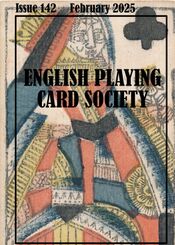
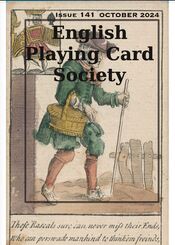
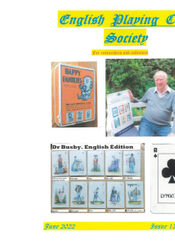
The Society publishes the EPCS Newsletter three times a year and maintains an online archive of back issues.


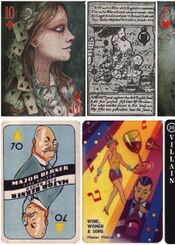
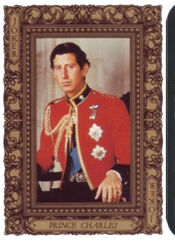
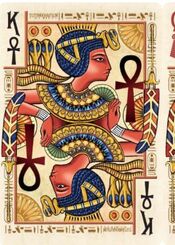
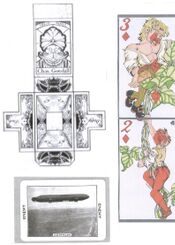
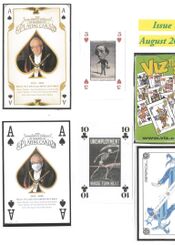
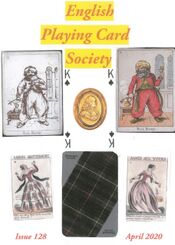
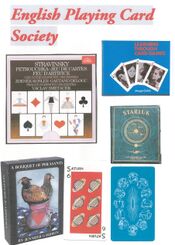
The Big Picture
Playing cards have a universal appeal and are a reflection of human culture.

Above: Chinese money-suited cards. Some of the earliest cards have origins in the Far East.
Playing cards have a long history and cultural significance, forming a part of almost every society around the world. The origins of playing cards can be traced back centuries, and today they remain a universal symbol of creativity, entertainment, and human connection. These small, rectangular pieces of paper have been a source of fun for generations and are still enjoyed in countless ways—whether in a simple game of solitaire, a high-stakes poker match, or the tarot cards used for fortune-telling. There is something about the history and design of playing cards that captures the imagination and inspires creativity. As Delef Hoffmann once said, “whether we consider cards as mere merchandise or as the bond which unites people with one another, just think of what we would be if we had no cards! How boring and unsociable our lives would be without this invention!”

Above: Dasavatara Ganjifa from India. Playing cards from India are often circular.
The origin of cards can be traced back to China, where they were first used as early as the 9th century. From there, the cards travelled across Asia and the Middle East, and finally found their way to Europe in the 14th century.
Since then, playing cards have been used for a wide range of purposes, including fortune-telling and even propaganda. But the most significant impact they have had on humanity is through their use in games, which have brought people together for centuries.

Above left: a set of Spanish playing cards from 1638 was discovered inside a prison wall during demolition, likely used for gambling by prisoners. Above center: Trump Presidential playing cards, playing cards are often used for political messages. Above right: the Magician from the popualr Rider-Waite tarot, which has become the template for modern tarot decks.
While playing cards have brought people together for fun and play, they have also been a source of disruption in the form of gambling. For many, gambling has become an addiction, leading to financial ruin and even anti-social problems.
The artistic value of cards cannot be overlooked, with their intricate details and unique designs of each card reflecting the creativity and ingenuity of artists. Playing cards are a reflection of our society, with each country and region having its unique designs and styles. As Sylvia Mann put it "there are fashions in cards, and these fashions very often reflect the history of the times". From the bold and colourful designs of India to the intricate and detailed patterns of Russia, playing cards are a testament to the creativity and diversity of the human experience.

Above left: Kashmir Playing Cards, above center: Ethiopian Air Lines playing cards produced by Nintendo, above right: striking playing cards designed by Masuo Ikeda.
Playing cards have a wide embrace, spanning across cultures and countries, with a scope of diverse subjects that reflect the values and beliefs of their respective societies.
Playing cards are an enduring symbol of human connection and creativity, transcending language, borders and cultures. Through the power of games, they have brought people together for centuries, creating shared experiences that have fostered friendships, learning and social bonds. While their role in gambling has been disruptive, their stunning artistic designs elevate them to works of art, worthy of appreciation and admiration. Playing cards are a testament to the power of human creativity and a reflection of the rich cultural tapestry of our world.
Recent Changes
Latest updates and modifications
Tamdem Editions

Air Marin

Sweden

Standard Swedish Pattern

Åkerlund & Rausing
Boman
Swedish pattern

Naipes Nacionales

Everyday Tarot

Unimog UX 100

Lauritz Peter Holmblad c.1850

C.L. Keiblinger, Copenhagen 1852-85

Abbatt Animal Families

Kille

Playing cards from Finland

World Tour

Hungarian Seasons pattern variant

Tomás Hijo

The Deck of Cards

Schweizer Trachten

American Civil War playing cards
Teodoro N. Miciano

Finnish Chromolithographic Playing Cards

Tarot del Toro

Insight Institute Tarot

Oxygène

Naipes Cristianos

Playing Cards and Religion
Humanitarian

Dronning Margrethe II
Devotional

Zewd Historical Deck

Tudor Rose No. 2137

Buffy the Vampire Slayer Tarot

Joseph Bardou & Fils cigarette papers

Pierre Cardin

Whot

Carte Romane

Balearic Souvenir Cards

Martin Sharp’s Psychedelic Tarot

Murder of Crows Tarot

Views of Baden-Baden

Cartes Oracle or La Voyante

Tarot Familiars
